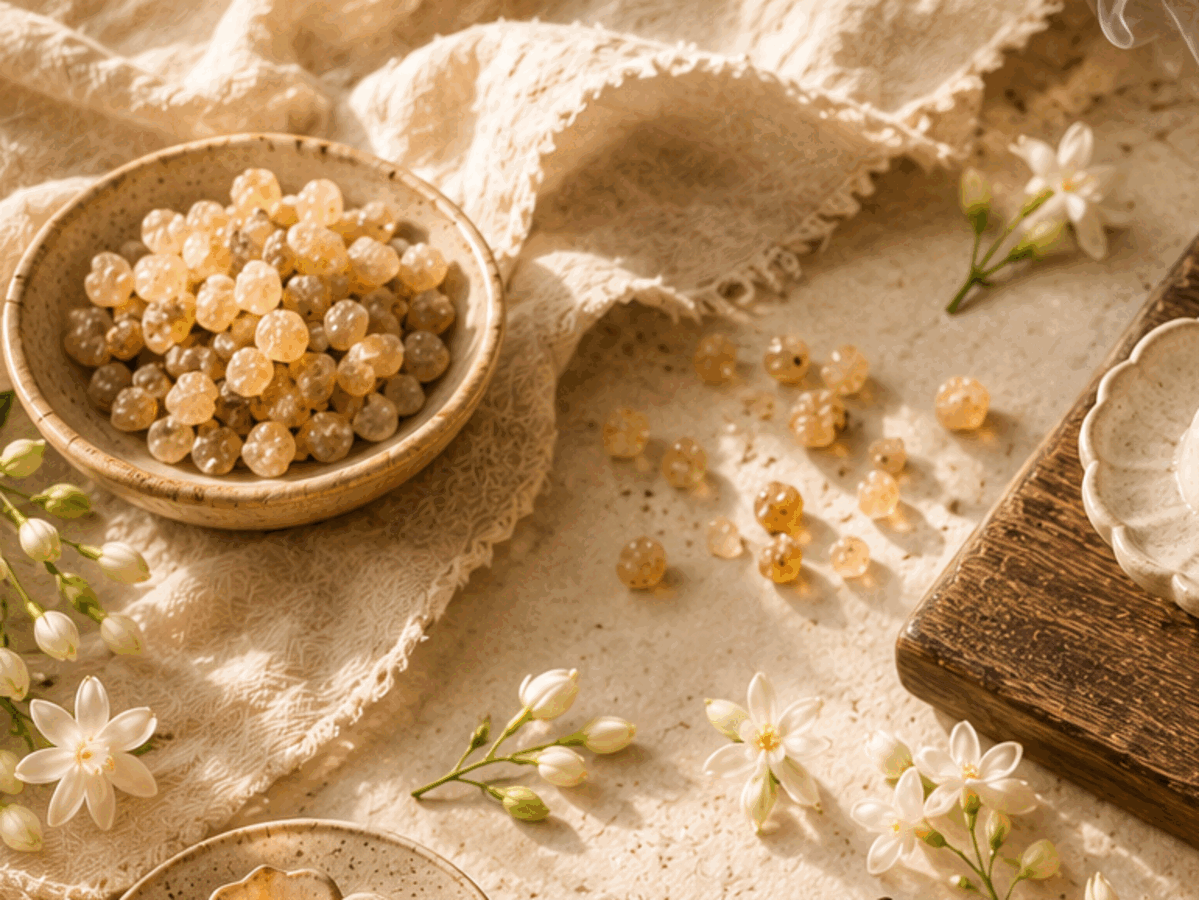
If you have ever smelled a truly good nagchampa and wondered why nothing from the supermarket comes close, the answer is usually a single ingredient: halmaddi.
What it is
Halmaddi is a semi-liquid resin tapped from the Ailanthus triphysa tree, which grows in the Western Ghats. Fresh, it is grey-green and sticky, with a scent that sits somewhere between honey, damp earth, and balsam. It is what gives classic nagchampa its soft, plasticky, almost edible warmth, and what lets a stick hold fragrance without a pile of synthetic fixatives.
Why it became rare
For decades halmaddi was over-tapped. Careless cuts weakened the trees, yields fell, and at one point harvesting was restricted to let the forests recover. Prices climbed, and most mass producers quietly switched to synthetic substitutes that approximate the smell but not the behaviour. That is a large part of why cheap nagchampa smells flat and sharp: the resin that made it famous is simply not in it.
How we use it
We use real halmaddi, sourced in small quantities, and we treat it as the backbone of a blend rather than a garnish. It is folded into the wet masala with sandalwood dust and the flower or resin that names the fragrance, then rested for days so the oils marry before the sticks are rolled. It is slower and costlier, and it is the difference you smell.
Good ingredients are not a marketing line. They are the reason a fragrance feels round instead of thin, and halmaddi is the clearest example we know.